

In my fifteen years of building pools across South Carolina, I’ve seen too many close calls that could have been prevented with proper safety measures. The most heartbreaking conversations I have are with families who thought they understood pool safety requirements in South Carolina, only to discover gaps in their knowledge after a frightening incident.
As a father myself and someone who’s helped hundreds of families create safe pool environments, I can tell you that understanding South Carolina’s pool safety laws is just the starting point. Real pool safety comes from combining legal compliance with smart family practices that protect everyone, especially children who are naturally drawn to water.
Let me share what I’ve learned about pool safety requirements in South Carolina from years of working with families, insurance companies, and local safety officials. More importantly, I’ll explain how to create layers of protection that go beyond minimum legal requirements.
South Carolina takes pool safety seriously, with state laws that establish minimum safety standards for residential pools. However, many homeowners don’t realize that local municipalities often have additional requirements that exceed state minimums.
South Carolina law requires barriers around all residential pools capable of holding water more than 24 inches deep. This applies to permanent pools, above-ground pools, and even some large portable pools. The barrier must surround the pool area and meet specific height and construction standards.
I’ve installed hundreds of safety barriers over the years, and I can tell you that proper installation makes all the difference. The law requires barriers to be at least 4 feet high. Still, I often recommend 5-foot obstacles for families with particularly active children or those living in neighborhoods where children might wander into yards.
Every barrier system must include self-closing, self-latching gates that prevent unsupervised access. The latching mechanism must be located at least 54 inches above ground level, making it impossible for small children to reach. I’ve seen too many families install beautiful barriers only to leave gates propped open or use inadequate latching systems.
The gate must open outward from the pool area and close completely under its power. Spring hinges and magnetic latches both work, but they must be properly adjusted and regularly maintained. I always test gate systems during final inspections and provide homeowners with maintenance schedules.

Many pool safety requirements in South Carolina allow existing home structures to serve as part of the barrier system, but with strict conditions. Doors providing direct pool access must have additional safety measures: either door alarms that sound when opened, or locks positioned at least 54 inches above floor level.
I’ve worked with families to design pool areas that use existing home walls as barriers while ensuring all access points have appropriate safety measures. This approach can save money while meeting legal requirements, but it requires careful planning during the design phase.
While state law provides the foundation, many South Carolina communities have adopted stricter pool safety requirements. Spartanburg County, Greenville County, and most incorporated cities have additional safety provisions that homeowners must follow.
Some municipalities require pool alarms in addition to barrier systems. Others mandate specific types of pool covers or restrict certain barrier designs. I always research local requirements during the design phase to ensure compliance with all applicable regulations.
Charleston County, for example, requires door alarms on all pool access points, even when barriers exceed state requirements. Beaufort County has specific landscape requirements that affect barrier placement and design. These local variations can significantly impact project planning and costs.
Most local governments inspect pool safety installations as part of the final pool approval process. Inspectors verify barrier height, gate function, and overall system integrity. I coordinate these inspections carefully because approval is required before pools can be filled and used.
Failed safety inspections can delay pool completion by weeks, which is why I always verify compliance before requesting final inspections. Simple issues like improperly adjusted gate hardware can trigger re-inspection requirements and additional fees.
Complying with pool safety requirements in South Carolina is essential, but it’s just the beginning of comprehensive family protection. The most effective pool safety strategies combine multiple layers of security that address different types of risks.
While 4-foot barriers meet legal requirements, I often recommend 5-foot systems for families with athletic children or those concerned about neighborhood security. Taller barriers are harder to climb and provide additional peace of mind without significantly increasing costs.
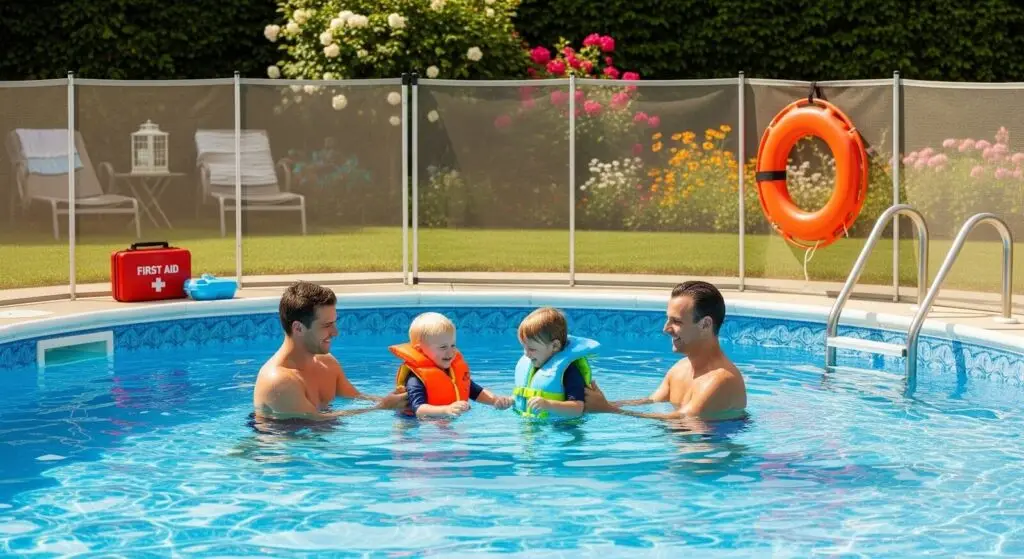
Mesh safety fencing offers advantages over traditional solid barriers. The transparency allows better visibility across the pool area while meeting all legal requirements. Mesh systems are also removable for entertaining while maintaining permanent posts that make reinstallation simple.
Door and window alarms provide early warning when children approach pool areas. Modern systems offer smartphone connectivity, allowing parents to monitor pool access even when not at home. I’ve installed systems that send immediate alerts to multiple family members whenever pool barriers are breached.
Water disturbance alarms detect when someone enters the pool water. These systems can distinguish between wind-blown debris and actual water entry, reducing false alarms while providing critical early warning. Battery-powered units are easy to install and maintain.
Automatic safety covers provide dual benefits: energy efficiency and safety protection. When properly installed and used, they can support the weight of adults and prevent accidental water entry. However, covers must be completely closed to provide safety benefits – partially closed covers create additional hazards.
Manual safety covers offer similar protection at a lower cost but require discipline to use consistently. I’ve seen families install expensive cover systems only to leave them open during pool season, eliminating their safety benefits.
Technology and barriers provide important protection, but human vigilance remains the most critical element of pool safety. I share these practices with every family because they prevent most pool accidents.
Active adult supervision means undivided attention when children are near water. This doesn’t mean glancing up from phones or conversations, it means focused watching with the ability to respond immediately. I recommend designated “water watchers” during pool parties who take turns providing focused supervision.
The concept of “layers of supervision” recognizes that different family members have different capabilities. Older children can help watch younger siblings, but adult supervision is always required. Swimming lessons don’t eliminate drowning risk; they just provide additional protection layers.
Every pool family should learn CPR and basic water rescue techniques. I’ve connected families with local Red Cross chapters that offer pool-specific safety training. These skills provide confidence and can save lives during emergencies.
Pool areas should include rescue equipment: reaching poles, throw rings, and first aid supplies stored in weatherproof containers. I install equipment storage during pool construction and provide families with supply checklists and replacement schedules.
Clear pool rules help establish safe practices for family members and guests. Common rules include no running, no glass containers, no swimming alone, and mandatory adult supervision for non-swimmers. Posting rules visibly reminds everyone of safety expectations.
Regular family discussions about pool safety keep these topics current, especially as children grow and their capabilities change. I encourage families to review safety practices at the beginning of each pool season and after any incidents or close calls.
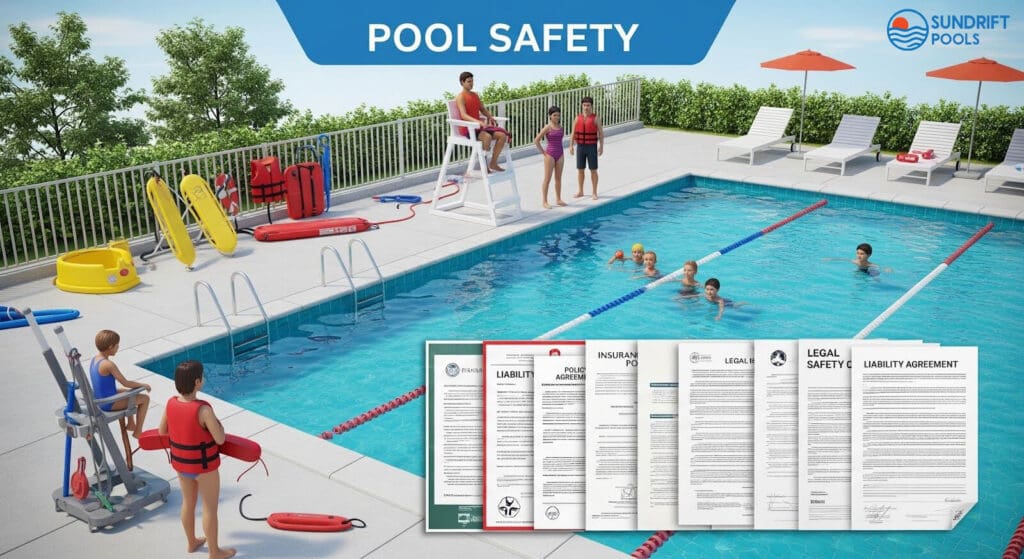
Pool ownership creates liability exposure that many families don’t fully understand. While this article focuses on safety rather than legal advice, understanding basic liability concepts helps families make informed decisions about protection measures.
Most insurance companies require minimum liability coverage for pool owners, often $300,000 or higher. Some insurers mandate specific safety features beyond legal requirements, such as pool alarms or professional safety inspections.
I always recommend discussing pool plans with insurance agents before construction begins. Some safety features may qualify for premium discounts, while inadequate safety measures can increase rates or affect coverage availability.
South Carolina recognizes the “attractive nuisance” doctrine, which holds property owners responsible for injuries to children who enter their property without permission. This legal concept makes comprehensive safety measures important even for families without young children.
Understanding this liability exposure helps explain why pool safety requirements in South Carolina exist and why exceeding minimum standards makes financial sense. Preventing access prevents accidents and reduces liability exposure.
Different ages require different safety approaches, and effective pool safety evolves as children grow and develop new capabilities.
This age group faces the highest drowning risk and requires the most comprehensive protection. Constant adult supervision within arm’s reach is essential, even with barriers and alarms in place. Water wings and floaties provide false security and shouldn’t replace supervision.
I recommend removable mesh fencing for families with very young children. These systems provide complete pool area isolation that can be removed as children mature and develop swimming skills.
Swimming lessons become valuable during this age range, but they don’t eliminate drowning risk. Children may overestimate their abilities or panic in unexpected situations. Continued supervision and clear rules remain essential.
Pool games and activities should emphasize safety practices. Teaching children to check water depth before diving, swim with buddies, and respect pool rules creates habits that last into adulthood.
Older children face different risks, often related to overconfidence, peer pressure, or poor judgment. Discussions about alcohol and swimming, diving safety, and emergency response have become important over the years.
Teen pool parties require clear rules about supervision, guest limits, and acceptable behavior. Many accidents involving teenagers occur during unsupervised gatherings where peer pressure overcomes good judgment.
Pool safety requirements in South Carolina don’t end with installation; ongoing maintenance ensures continued protection as equipment ages and families change.
Gate hardware, alarm batteries, and barrier integrity should be checked monthly during pool season. I provide maintenance checklists to help families establish routines that keep safety systems functioning properly.
Weather exposure affects all safety equipment over time. UV radiation weakens some materials, while temperature changes can affect mechanical components. Annual professional inspections identify issues before they compromise safety.
Winter pool closure doesn’t eliminate safety concerns. Ice can make barriers slippery and dangerous, while frozen pools may appear solid enough to walk on, but aren’t safe. Maintaining barriers and supervision during off-season months prevents accidents.
Spring pool opening provides opportunities to inspect and update safety systems. This is when I recommend checking gate operation, testing alarms, and reviewing family safety practices for the upcoming season.
Installing effective pool safety systems requires expertise in both legal requirements and practical family needs. Professional installation ensures compliance while maximizing protection effectiveness.
The most effective safety systems are planned during pool design rather than added afterward. Integrating barriers, alarms, and covers into the original design creates better functionality and aesthetics while often reducing costs.
I work with families to understand their specific safety needs and recommend systems that provide appropriate protection without compromising pool enjoyment. The goal is comprehensive safety that families will use consistently.
Proper installation ensures safety systems function as designed and meet legal requirements. DIY installations often fail inspections or don’t provide the intended protection levels. Professional installation typically includes warranties and ongoing support.
Many safety equipment manufacturers require professional installation to maintain warranties. This requirement exists because improper installation can compromise safety effectiveness and create liability issues.
Effective pool safety combines legal compliance with family-specific practices that address your unique situation and risk factors.
Start by understanding all applicable pool safety requirements in South Carolina for your location and situation. Consider family composition, neighborhood factors, and personal comfort levels when planning safety measures.
I help families develop comprehensive safety plans that address current needs while considering how requirements might change as families grow. This forward-thinking approach prevents the need for expensive retrofits later.
Installing safety equipment is just the beginning; family training ensures everyone understands proper use and maintenance. I provide operation training for all safety systems and connect families with additional educational resources.
Regular practice with emergency procedures keeps skills current and builds confidence. Family pool safety isn’t a one-time discussion; it’s an ongoing commitment that evolves with experience and changing needs.
Pool safety represents one of the most important investments you’ll make as a pool owner. Understanding pool safety requirements in South Carolina provides the foundation, but creating truly safe environments requires combining legal compliance with smart family practices and quality safety equipment.
The goal isn’t to eliminate all risk, it’s to reduce risks to acceptable levels while maintaining the joy and benefits of pool ownership. When done properly, comprehensive pool safety provides peace of mind that allows families to focus on creating positive memories rather than worrying about potential dangers.
Working with experienced pool professionals who understand both legal requirements and practical family needs ensures your safety investment provides maximum protection for years to come. Your family’s safety is worth the investment in proper planning, quality equipment, and ongoing vigilance.