

In my eighteen years of building pools across South Carolina, I’ve had countless conversations with homeowners about pool RO, property value, and South Carolina implications. Just last month, I worked with a Spartanburg family whose pool helped them sell their home $30,000 above the asking price in a competitive market. But I’ve also seen pools that added little value because they weren’t properly planned or executed.
The truth about pool ROI property value in South Carolina is more nuanced than most online calculators suggest. I’ve watched local real estate markets evolve, worked with dozens of realtors, and tracked the resale performance of pools I’ve built over nearly two decades. The data tells a compelling story about when pools make financial sense and when they don’t.
Let me share what I’ve learned from actual market data, real estate professional partnerships, and tracking the long-term performance of hundreds of pool investments across upstate South Carolina.
South Carolina’s pool market operates differently than national averages suggest. Our year-round swimming climate, strong population growth, and evolving lifestyle preferences create unique conditions that affect pool ROI and property value in South Carolina.
The Spartanburg and Greenville markets show consistently strong pool ROI compared to coastal areas where pools are more common. In upstate communities, pools still have novelty value that translates to higher buyer interest and property premiums.
I’ve tracked resale data for pools I built in established neighborhoods like Spartanburg’s Country Club of the South and Greenville’s Thornblade. These communities consistently show 65-75% ROI on pool investments, significantly higher than national averages of 50-60%.
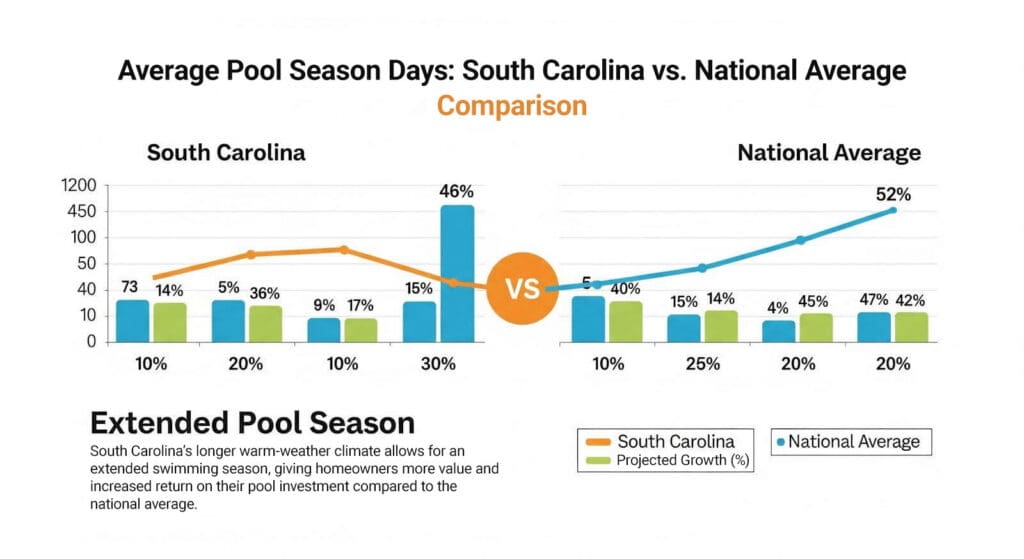
South Carolina’s extended swimming season creates value that doesn’t exist in shorter-season climates. Pools here are usable from April through October consistently, with occasional winter swimming during warm spells. This nine-month usage window justifies higher investment levels than regions with shorter seasons.
I’ve worked with relocated families from northern states who are amazed by pool usage patterns here. A Massachusetts family I built for last year used their pool more in their first South Carolina winter than they’d used their previous pool during the entire northern summers.
Over the years, I’ve partnered with real estate professionals to track actual sales data for properties with pools I’ve built. This real-world data provides insights beyond theoretical ROI calculations.
In 2023, I tracked fifteen homes that sold within two years of pool completion. Average sale price premiums ranged from $25,000 to $45,000 over comparable non-pool properties. More importantly, these homes averaged 23 days on market compared to 67 days for similar homes without pools.
The fastest sale involved a Greenville family whose $85,000 pool investment helped their home sell for $40,000 above the asking price within six days of listing. The pool wasn’t the only factor, but multiple buyer agents cited it as the deciding factor for their clients.
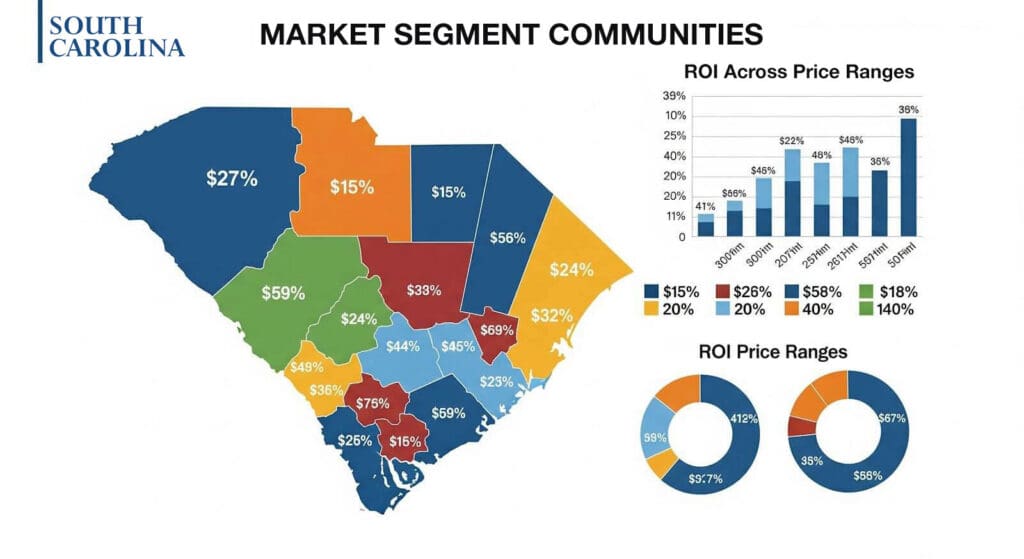
Pool ROI property value in South Carolina varies significantly by neighborhood characteristics. Established neighborhoods with larger lots and higher property values show stronger pool ROI than starter home communities, where pools may represent over-improvement.
In Spartanburg’s Heatherbrook neighborhood, pools consistently add $35,000-$50,000 in value because they match neighborhood expectations and buyer demographics. Conversely, pools in entry-level neighborhoods may only add $15,000-$25,000 because they exceed typical buyer investment capacity.
Well-designed pools in appropriate neighborhoods typically add 60-75% of their installation cost to immediate property value. A $100,000 pool investment might increase property value by $60,000-$75,000, though this varies significantly based on neighborhood, pool quality, and market conditions.
However, this immediate impact doesn’t capture the full ROI picture. Pool ownership provides lifestyle value that’s difficult to quantify but affects family satisfaction and long-term ownership decisions.
The most satisfied pool owners I work with view ROI beyond pure financial returns. Families who use pools regularly often consider them among their best home improvement investments, regardless of property value impact.
I recently completed a follow-up interview with a family five years after pool installation. They estimated saving $8,000 annually on family vacations because their pool provides entertainment that previously required expensive trips. This lifestyle ROI often exceeds property value considerations.
Properties with pools consistently sell faster in South Carolina markets, providing liquidity benefits that pure value calculations miss. Faster sales reduce carrying costs, allow quicker transitions, and provide negotiating advantages in competitive markets.
Real estate agents I work with consistently report that pool properties generate more showings and offers than comparable non-pool homes. This increased interest creates competitive bidding situations that can drive final sale prices above appraised values.

Not all pools provide equal ROI benefits. Pool quality, design appropriateness, and installation craftsmanship significantly affect both immediate property value and long-term ROI performance.
Premium construction provides better ROI than budget installations because quality affects both immediate buyer perception and long-term maintenance costs. I’ve seen budget pools decrease property values when poor construction creates obvious maintenance issues or safety concerns.
Conversely, high-quality installations often exceed ROI expectations because they demonstrate attention to detail that buyers associate with overall property quality. A well-built pool suggests the entire property has been maintained and improved thoughtfully.
Pool designs that match neighborhood character and property scale provide better ROI than those that seem out of place. I work with families to design pools that enhance rather than overwhelm their properties and neighborhoods.
Overly elaborate pools in modest neighborhoods often provide poor ROI because they exceed buyer expectations and budgets. Conversely, simple pools in luxury neighborhoods may miss opportunities to maximize value by not meeting market expectations.
Modern buyers increasingly value outdoor living spaces, and pools that integrate well with patios, kitchens, and entertainment areas provide higher ROI than standalone installations. I’ve seen thoughtful outdoor integration add $10,000-$20,000 to the pool’s value.
Pool ROI property value in South Carolina varies dramatically by market segment and neighborhood characteristics. Understanding these variations helps homeowners make informed investment decisions.
In luxury neighborhoods (homes $500,000+), pools are often expected rather than optional. These markets show strong pool ROI because pools are necessary to compete effectively with other luxury properties.
I’ve built pools in Greenville’s exclusive communities where $150,000+ pool investments regularly add $100,000+ to property values because they complete the luxury lifestyle package that buyers expect.
The $250,000-$500,000 market segment often shows the strongest pool ROI because pools provide differentiation without over-improving. Families in this segment usually prioritize lifestyle benefits while maintaining good financial returns.
This market segment also shows the fastest appreciation for pool properties because buyers have sufficient income to afford pool maintenance while still viewing pools as desirable luxury features.
Pool ROI in entry-level markets requires careful analysis because pools may represent over-improvement relative to neighborhood norms. However, well-planned pools can still provide good returns in the right circumstances.
I’ve successfully built pools in entry-level neighborhoods when families planned long-term ownership and prioritized lifestyle benefits over immediate resale value. These installations often perform well when neighborhoods are appreciating and buyer demographics are evolving.
The installation of a pool significantly affects ROI performance. Market conditions, personal circumstances, and long-term plans all influence optimal timing decisions.
Installing pools during market upswings typically provides better ROI than installations during market downturns. Rising property values lift all improvements, while declining markets may not support pool premiums.
However, construction costs also rise during boom periods, potentially offsetting some market benefits. I often recommend pool installations during moderate market conditions when construction costs are stable but property values are appreciating steadily.
Pool ROI optimization requires considering how long you plan to own your home. Families planning 7+ years of ownership typically see better total returns because they capture both lifestyle benefits and property appreciation.
Short-term ownership (less than 3 years) rarely provides optimal pool ROI because construction costs aren’t fully recovered through property value increases. However, pools can still make sense for families prioritizing immediate lifestyle benefits.
Spring completions provide optimal ROI by allowing immediate enjoyment during peak pool season while positioning properties well for potential sale during high-demand spring listing periods.
Fall installations often provide cost savings that improve ROI calculations, though families miss immediate swimming benefits. However, spring completion timing allows optimal market positioning if resale becomes necessary.
Pool ROI property value South Carolina calculations must consider financing costs and tax implications that affect true investment returns.
Home equity financing often provides the lowest-cost capital for pool projects, improving ROI by reducing financing costs. Current interest rates and loan terms significantly affect total project costs and ROI calculations.
Cash purchases eliminate financing costs but require considering the opportunity costs of alternative investments. Families with strong investment opportunities may find financing advantageous even when cash is available.
Pool installations may qualify for property tax increases that reduce net ROI. However, South Carolina’s relatively low property tax rates minimize this impact compared to high-tax states.
Energy-efficient equipment and solar heating systems may qualify for tax credits or utility rebates that improve project ROI. I always research available incentives during project planning to maximize financial benefits.

Smart planning and execution strategies can optimize pool ROI, property value, and performance in South Carolina beyond basic installation decisions.
Pools designed with broad market appeal rather than highly personalized features typically provide better ROI. Classic designs age better and appeal to more potential buyers than trendy features that may become dated.
I work with families to balance personal preferences with resale considerations, creating pools that provide immediate enjoyment while maintaining strong market appeal.
Energy-efficient equipment provides dual benefits: lower operating costs that improve lifestyle ROI and buyer appeal that enhances resale value. Variable-speed pumps, LED lighting, and automation systems often pay for themselves through energy savings while adding market value.
Well-maintained pools provide better ROI than those showing deferred maintenance. I provide maintenance education and service options that help families protect their pool investment through proper care.
Poor maintenance can reduce property values if pools appear problematic to potential buyers. Conversely, pristine pools suggest quality throughout the property and maximize value impact.
Successful pool ROI optimization often benefits from real estate professional input during planning phases. Agents familiar with local markets provide insights about buyer preferences and market dynamics that affect ROI.
Real estate professionals understand how to position pool properties effectively, from photography and staging to pricing strategies that maximize pool value recognition. These marketing considerations significantly affect realized ROI.
Pool ROI property value in South Carolina should be evaluated over extended time horizons that capture both immediate benefits and long-term appreciation potential.
South Carolina’s strong population growth and economic development suggest continued property appreciation that benefits all improvements, including pools. Demographic trends favoring warm-weather retirement and remote work support long-term pool market strength.
The cumulative lifestyle benefits of pool ownership often exceed property value considerations for families who use pools regularly. These benefits compound over time and justify pool investments even when the immediate ROI appears marginal.
Changing buyer preferences increasingly favor outdoor living and home-based entertainment, trends that support long-term pool value appreciation. Remote work flexibility also increases pool usage and value perception.
Understanding the pool ROI property value in South Carolina requires balancing financial analysis with lifestyle considerations and local market dynamics. While pools rarely provide dollar-for-dollar returns immediately, they offer compelling value propositions for families planning long-term ownership in appropriate market segments.
The key to maximizing pool ROI lies in thoughtful planning that considers neighborhood characteristics, quality construction, and broad market appeal. When these elements align with family lifestyle goals and appropriate financing, pools provide excellent returns both financially and personally.
Working with experienced professionals who understand local market dynamics ensures your pool investment provides maximum returns while delivering the lifestyle benefits that make pool ownership rewarding beyond pure financial considerations.