


I’ve been pulling pool permits in Spartanburg County for over a decade, and I can tell you that understanding the permit process upfront saves homeowners thousands of dollars and weeks of delays. Every month, I see families who thought they could navigate the permitting process themselves, only to discover rejections, code violations, or missing requirements that bring their dream pool project to a halt.
The good news? Once you understand how Spartanburg County handles pool permits, the process becomes manageable. The challenging news? The requirements are specific, the inspections are thorough, and one missed detail can derail your entire timeline. Let me walk you through everything I’ve learned about securing pool permits in Spartanburg County from years of successful applications.
Spartanburg County treats pool construction as a major home improvement that requires comprehensive permitting. Unlike some counties that have simplified pool permit processes, Spartanburg maintains detailed requirements that protect both homeowners and the broader community.
Every pool project requires a building permit, an electrical permit, and a plumbing permit. Depending on your specific design, you might also need mechanical permits for heating systems or special licenses for water features. I’ve handled projects that required five separate permits, each with its own application process and inspection schedule.
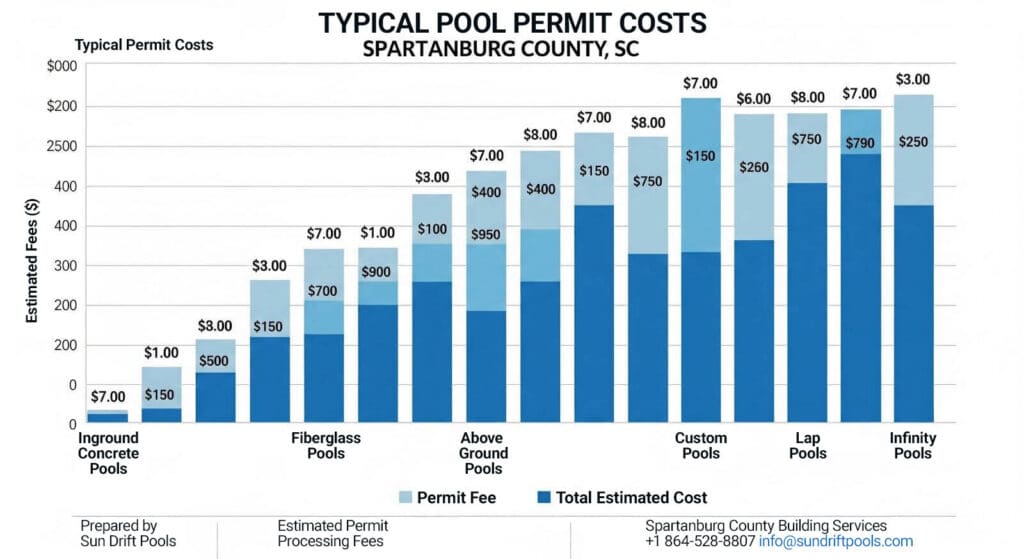
The building permit covers structural elements: excavation, steel installation, concrete work, and decking. This is your primary permit and typically costs between $150-$400, depending on pool size and complexity. The application requires detailed construction drawings, site plans, and structural calculations.
Electrical permits cover all pool-related electrical wor,k including lighting, equipment connections, and safety systems. Spartanburg County requires licensed electricians for all pool electrical work, and the permit costs typically range from $75-$200. The county is particularly strict about GFCI protection and bonding requirements.
Plumbing permits address water supply connections, drainage systems, and equipment plumbing. These permits usually cost $50-$150 and require detailed plumbing plans showing all connections and pipe routing.
If your pool includes a spa, water features, or gas heating systems, additional permits may be required. I recently completed a project with a natural gas heater that required a separate mechanical permit and gas line inspection. These additional permits can add $100-$300 to your total permit costs.
Pools with significant grading changes or retaining walls often require additional structural permits. Spartanburg County’s rolling topography means many pool projects involve substantial earthwork that triggers additional permit requirements.
Before submitting any pool permits to Spartanburg County, I always conduct a thorough site survey and verify property boundaries. The county requires accurate property surveys showing setback distances from all property lines, structures, and utilities. Attempting to use outdated surveys or estimates leads to automatic rejection.
I also verify all utility locations through 811 services and coordinate with the county’s GIS department to identify any easements or restrictions that might affect pool placement. This preparation work takes 2-3 days but prevents weeks of delays later.
Spartanburg County requires comprehensive documentation for pool permit applications. Site plans must be drawn to scale and show the pool location relative to property boundaries, existing structures, septic systems, and wells. Construction drawings must detail structural elements, dimensions, and material specifications.
The county also requires soil and drainage information, particularly important in our clay-heavy region. I often include soil test results and drainage plans even when not specifically required, as this demonstrates thorough planning and usually expedites approval.
Pool permits in Spartanburg County typically take 10-14 business days for initial review, assuming complete and accurate applications. However, incomplete applications or those requiring plan revisions can extend this timeline significantly. I’ve seen simple errors, such as missing signatures, delay projects by weeks.
The county reviews applications in order of submission, and processing times can extend during peak construction seasons. Spring applications (March through May) often take longer due to volume, while fall and winter applications typically process more quickly.
Building permits for residential pools start at approximately $150 for basic installations and increase based on project value and complexity. The county uses a tiered fee structure, so larger or more complex pools cost more to permit. A typical gunite pool project usually falls in the $200-$350 range for building permits.
Electrical permits typically cost $75-$200, depending on the scope of electrical work. Simple lighting and equipment connections fall at the lower end, while complex automation systems or extensive lighting packages increase permit costs.
Plumbing permits generally range from $50-$150, with basic pool plumbing at the lower end and complex spa systems or water features at the higher end.
Re-inspection fees apply when projects fail initial inspections. These fees typically run $50-$100 per re-inspection and can add up quickly if construction doesn’t meet code requirements. This is why working with experienced contractors familiar with local codes is so important.
Plan revision fees apply when changes are made after permit approval. Minor revisions might cost $25-$50, while major changes can require completely new permit applications. I always encourage clients to finalize all design decisions before permit submission to avoid these additional costs.
All pools must have appropriate safety barriers meeting or exceeding state requirements. In Spartanburg County, this typically means 4-foot minimum height barriers surrounding the pool area. Self-closing, self-latching gates are required, and the latch must be located at least 54 inches above ground level.
Existing home structures can serve as part of the barrier system if they meet specific requirements. However, doors providing direct access to pool areas must have additional safety measures like alarms or locks.
Electrical code compliance is particularly strict for pool installations. All pool equipment must be on dedicated circuits with appropriate GFCI protection. Bonding requirements ensure all metal components within five feet of the pool are electrically connected to prevent shock hazards.
Lighting circuits must meet specific safety requirements, and licensed electricians must perform any electrical work. The county inspects all electrical work before allowing it to be covered or concealed.
Spartanburg County requires proper drainage systems to prevent runoff issues that could affect neighboring properties. Pool decks must slope away from structures, and drainage must connect to appropriate disposal systems.
Environmental considerations include setback requirements from wells and septic systems. Pools must maintain specific distances from these systems to prevent contamination issues.
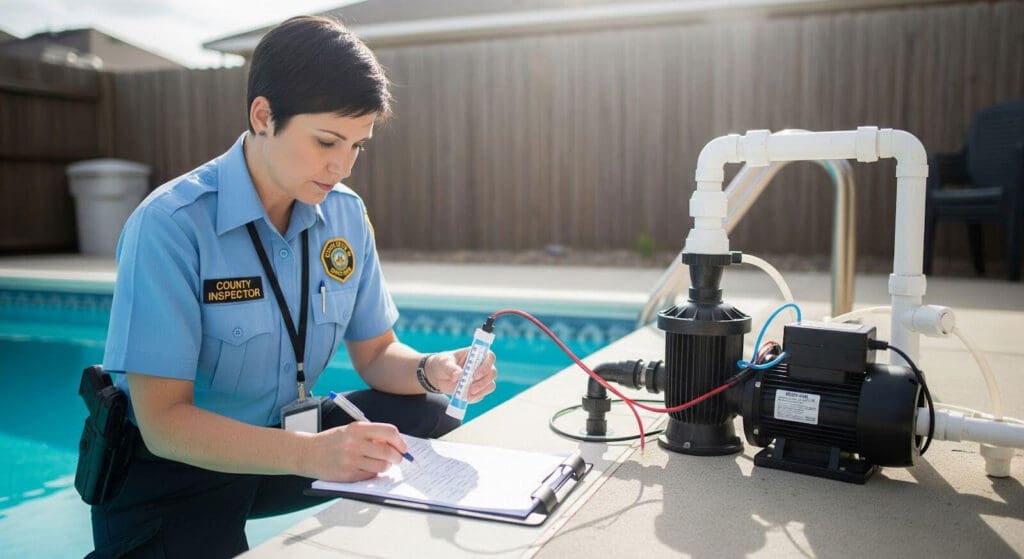
The inspection process for pool permits in Spartanburg County involves multiple phases throughout construction, each requiring approval before proceeding to the next phase.
Before excavation begins, the county conducts a pre-construction inspection to verify setbacks, utility clearances, and site preparation. This inspection ensures the planned pool location matches permitted plans and identifies any issues before major work begins.
I always request this inspection early in the process to address any concerns before mobilizing equipment and crews. Corrections at this stage are much less expensive than changes required during construction.
During construction, the county inspects steel installation before gunite application. This inspection verifies proper rebar placement, spacing, and structural integrity. The inspector also checks plumbing rough-in work that will be concealed by concrete.
Electrical rough-in inspections occur before backfill and decking work begins. The inspector verifies proper conduit installation, grounding, and bonding before these systems are covered.
Final inspections cover all completed work, including structural integrity, electrical safety, plumbing functionality, and barrier compliance. The inspector tests all safety systems and verifies compliance with approved plans.
Pool permits in Spartanburg County aren’t considered complete until final inspection approval. This approval is required before the pool can be filled and used, making timely inspections critical for project completion.
After handling hundreds of pool permits in Spartanburg County, I’ve identified the most common mistakes that delay projects and increase costs.
The most frequent issue I see is incomplete permit applications. Missing signatures, outdated surveys, or inadequate construction drawings lead to automatic rejections. I always review applications completely before submission and maintain relationships with surveyors and engineers to ensure rapid turnaround on required documentation.
Property setback violations are another common problem, particularly on smaller lots or those with irregular shapes. Spartanburg County enforces setback requirements strictly, and violations discovered during construction can require expensive redesigns or relocations.
Safety code violations during construction create costly delays and re-inspection fees. Working with contractors familiar with local codes prevents most of these issues, but proper planning and attention to detail during construction are essential.
When Sun Drift Pools handles your pool permits in Spartanburg County, we manage the entire process from application through final approval. This service saves homeowners time, prevents costly mistakes, and ensures compliance with all local requirements.
We begin with a thorough site evaluation and documentation preparation. Our team includes licensed professionals familiar with county requirements, ensuring complete and accurate applications. We maintain current relationships with county staff, allowing us to address questions quickly and navigate any challenges efficiently.
During construction, we coordinate all required inspections and ensure work meets code requirements before each inspection. This proactive approach prevents delays and re-inspection fees that can derail project timelines.
While homeowners can technically handle their pool permits in Spartanburg County, the complexity and consequences of mistakes make professional management valuable for most families. Permit delays can extend construction timelines by weeks, while code violations can require expensive corrections.
Our permit management service typically costs less than the delays and corrections that result from DIY permit attempts. More importantly, it ensures your project proceeds smoothly without permit-related stress or complications.

Understanding realistic timelines for pool permits in Spartanburg County helps you plan your construction schedule and set appropriate expectations.
Initial permit review typically takes 10-14 business days for complete applications. However, plan revisions or additional information requests can extend this timeline significantly. During peak construction seasons, processing times may increase due to application volume.
I always recommend starting the permit process 4-6 weeks before planned construction begins. This buffer accommodates processing time, potential revisions, and scheduling flexibility for construction starts.
Pool permits Spartanburg County to process more slowly during peak construction seasons when application volumes are highest. Fall and winter applications typically receive faster processing, while spring applications may experience delays.
Building positive relationships with county permitting staff makes the process smoother and more efficient. I’ve found that respectful, professional interactions and thorough preparation create better outcomes for everyone involved.
When working directly with county staff, come prepared with specific questions and complete documentation. Staff members are knowledgeable and helpful, but they appreciate applicants who understand the process and respect their time.
If questions arise during construction, contact the appropriate inspector directly rather than waiting for scheduled inspections. Most issues can be resolved quickly with proactive communication.
Spartanburg County’s permit requirements exist to protect public safety and ensure quality construction. Understanding this perspective helps you work cooperatively with staff and avoid adversarial situations that can complicate your project.
Deciding whether to handle pool permits in Spartanburg County yourself or work with professional contractors depends on your experience, available time, and comfort with complex bureaucratic processes.
If you have construction experience, understand local codes, and have time to navigate the permit process, self-handling permits is possible. However, even experienced builders often prefer professional permit management for complex pool projects due to the specialized requirements and inspection schedules.
Professional permit management provides expertise, relationships, and accountability that prevent costly mistakes and delays. When Sun Drift Pools handles your permits, we guarantee compliance and take responsibility for navigating any challenges that arise.
The peace of mind and time savings typically justify the cost of professional permit management, particularly for families balancing work and family responsibilities during pool construction.
Navigating pool permits in Spartanburg County successfully requires understanding local requirements, preparing complete documentation, and managing multiple inspection phases. Whether you choose to handle permits yourself or work with experienced professionals, thorough preparation and attention to detail ensure smooth project approval and construction.
The permit process might seem daunting initially, but it’s designed to protect your investment and ensure safe, code-compliant construction. Working with knowledgeable professionals familiar with Spartanburg County requirements provides the best path to successful permit approval and project completion.