

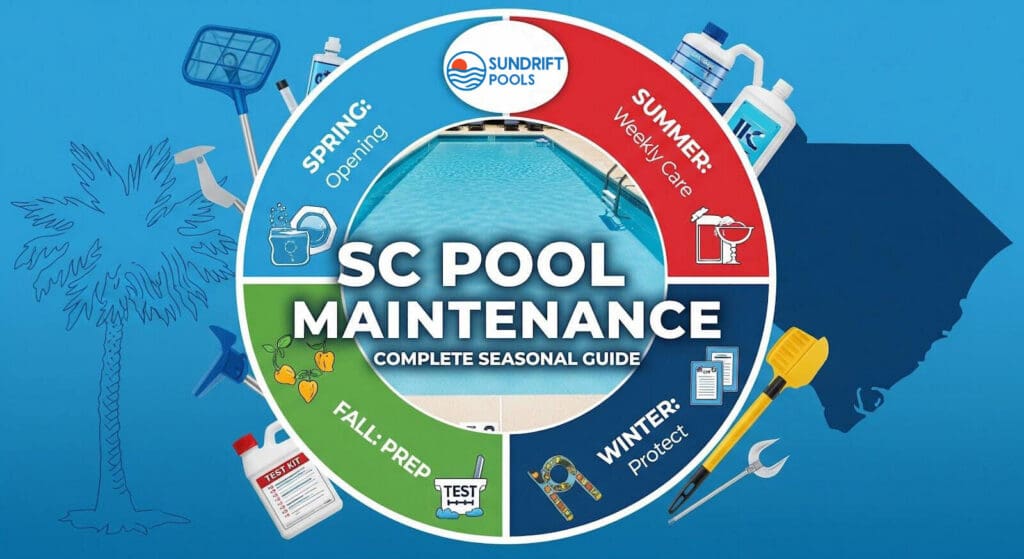
After twenty years of maintaining pools across South Carolina, I’ve learned that successful pool care isn’t about following a generic maintenance schedule – it’s about understanding how our unique climate affects your pool throughout the year. I’ve seen beautiful pools turn into green swamps during our humid summers and watched expensive equipment fail because owners didn’t adjust their pool maintenance schedule to South Carolina’s seasonal demands.
The biggest mistake I see new pool owners make is trying to follow maintenance advice written for Arizona or California. South Carolina’s climate presents unique challenges: intense summer humidity that promotes algae growth, sudden spring storms that dump debris and nutrients into pools, and winter temperature swings that can damage equipment if you’re not prepared.
Let me share the pool maintenance schedule for South Carolina that I’ve developed through years of service calls, equipment repairs, and working with hundreds of families to keep their pools crystal clear and equipment running efficiently year-round.
Before diving into the monthly schedule, it’s important to understand why South Carolina pools require different care than those in other regions. Our climate creates specific conditions that affect water chemistry, equipment performance, and maintenance needs.
South Carolina’s high humidity levels mean water evaporation rates vary dramatically throughout the year. During summer months, I’ve seen pools lose 2-3 inches of water per week to evaporation, which concentrates chemicals and minerals. Conversely, spring and fall rains can dilute water chemistry and introduce contaminants.
Our red clay soils affect pools differently than sandy or rocky soils found elsewhere. Clay particles are particularly problematic because they’re so fine that they can pass through sand filters, creating persistent cloudiness that requires specific treatment approaches.
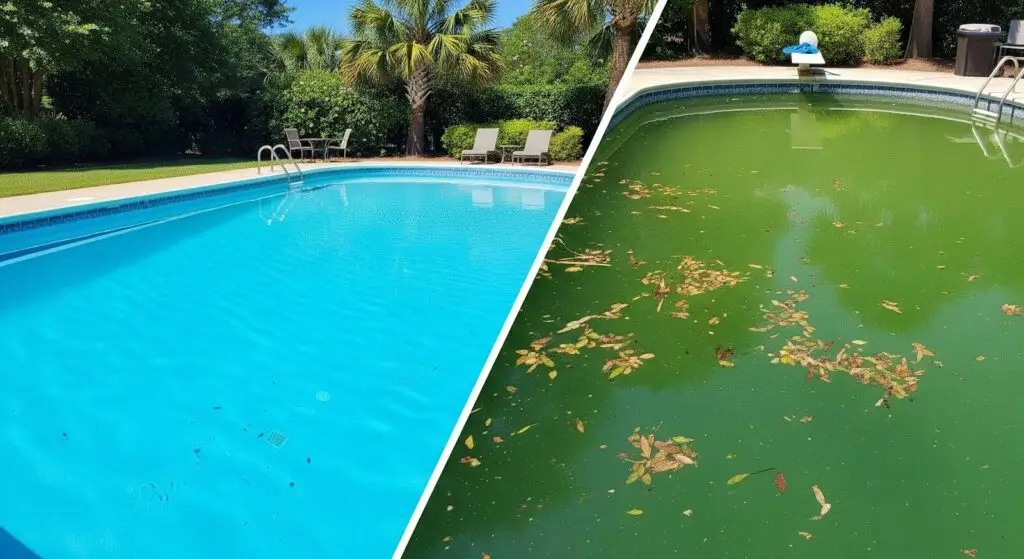
South Carolina’s weather patterns create maintenance challenges that generic schedules don’t address. Spring thunderstorms can dump massive amounts of organic matter into pools overnight. Summer heat creates perfect conditions for algae blooms that can overwhelm unprepared pool systems.
Fall brings unique challenges as trees shed leaves and organic debris. Winter temperature swings – from 70 degrees one day to freezing the next – can stress equipment and create water chemistry imbalances that persist into spring if not properly managed.
Spring represents the most critical time for the pool maintenance schedule in South Carolina’s success. Proper spring opening and early-season care set the foundation for the entire swimming season.
March pool opening in South Carolina requires careful attention to equipment that’s been dormant through winter. I always start with a thorough inspection of all systems before adding water or chemicals. Pump seals, filter conditions, and heater components need checking after months of non-use.
Water testing becomes critical during March because winter weather often affects water chemistry even in closed pools. I’ve found that South Carolina pools usually show high phosphate levels after winter, creating conditions for rapid algae growth once temperatures warm.
Equipment startup should follow a specific sequence: first restore water levels, then start circulation systems at low speed, test and balance water chemistry, and finally bring all equipment online gradually. Rushing this process often leads to equipment damage or water quality problems that persist all season.
April maintenance focuses on optimizing systems for the upcoming swimming season. This is when I calibrate automatic chemical feeders, service pool heaters, and establish regular cleaning routines that will carry through summer.
Filter cleaning becomes essential during April as trees begin shedding pollen and organic matter. South Carolina’s pine pollen is particularly challenging because it’s fine enough to pass through some filter media while being present in enormous quantities.
Water chemistry stabilization during April requires patience and consistent testing. Spring rains can dilute chemicals while warming temperatures increase bather load and chemical demand. I recommend daily testing during April until patterns stabilize.
May maintenance prepares pools for heavy summer use. This includes thorough equipment inspection, deep cleaning of pool surfaces, and establishing the weekly maintenance routines that will be essential during peak season.
Algae prevention becomes critical during May as water temperatures reach levels that support rapid growth. I’ve learned that preventive algaecide treatments in May prevent problems that are much harder to correct during the summer heat.
Equipment performance testing during May identifies issues before peak demand begins. Pump performance, filter capacity, and heater operation should all be verified and optimized before summer swimming season arrives.
Summer maintenance in South Carolina requires the most intensive pool maintenance schedule South Carolina pools will experience. High temperatures, frequent use, and intense UV exposure create challenging conditions that demand consistent attention.
June pool maintenance focuses on establishing sustainable routines that can handle summer’s demands. Daily skimming becomes essential as summer storms bring debris and organic matter. Weekly deep cleaning prevents buildup that becomes much harder to address later.
Chemical demand increases significantly during June as higher temperatures and increased bather loads consume chlorine faster. I typically see chlorine demand double between May and June in most South Carolina pools.
Equipment runtime adjustments become necessary as temperatures rise. Pumps that ran 6 hours daily in spring may need 8-10 hours during summer to maintain proper circulation and filtration.
July represents peak challenges for the pool maintenance schedule South Carolina pools face. Temperatures regularly exceed 90 degrees, creating ideal conditions for algae growth and requiring maximum chemical vigilance.
Daily water testing becomes non-negotiable during July. I’ve seen pools go from perfect to swamp-green in 24 hours during July heat waves. Chlorine levels, pH balance, and alkalinity all require daily monitoring and adjustment.
Equipment stress reaches maximum levels during July. Pool pumps work hardest, filters collect the most debris, and heaters (if used) face maximum demand. Regular equipment inspection prevents failures during peak season when repairs are most disruptive.
August continues July’s intensive maintenance requirements while beginning preparation for seasonal transitions ahead. This is when consistent maintenance routines prove their value – pools with good August maintenance sail through fall transition smoothly.
Heat stress management becomes critical during August as equipment operates under maximum stress. Pump motor ventilation, filter cleaning frequency, and chemical feeder calibration all require extra attention.
Water quality vigilance must continue at July levels throughout August. The temptation to relax maintenance routines as summer winds down often leads to problems that persist well into fall.
Fall transitions require careful attention to changing conditions while preparing pools for reduced use and eventual winter closure.
September pool maintenance in South Carolina deals with changing conditions as temperatures moderate, but humidity often remains high. Algae threats persist as falling leaves introduce new challenges.
Organic debris management becomes increasingly important as trees begin shedding. Leaf accumulation can overwhelm skimmer baskets and create nutrient loads that fuel algae growth even as temperatures cool.
Equipment runtime adjustments respond to decreasing temperatures and reduced bather loads. However, maintaining adequate circulation remains important for water quality and equipment health.
October represents an optimal time for deep pool cleaning and equipment maintenance that’s difficult during peak season. Lower temperatures and reduced use allow for thorough cleaning without disrupting family enjoyment.
Leaf management reaches peak importance during October as deciduous trees shed their autumn loads. I’ve seen October leaf accumulation create water chemistry problems that persist through winter if not properly managed.
Equipment maintenance tasks like motor lubrication, thorough filter cleaning, and heater servicing should be completed during October, when pools can be taken offline temporarily if needed.
November pool maintenance focuses on preparing pools for winter conditions while maintaining water quality for families who continue swimming during mild weather.
Winterization decisions in South Carolina aren’t as straightforward as in northern climates. Many families continue using pools sporadically through winter, requiring modified maintenance approaches rather than complete closure.
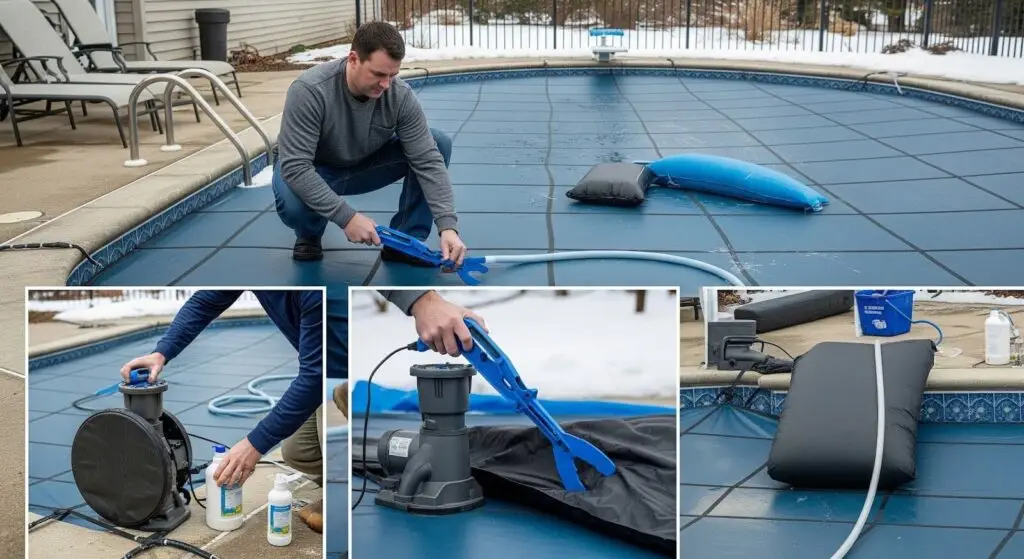
Equipment protection becomes important even for pools remaining operational. Freeze protection settings, insulation checks, and backup equipment preparation help prevent damage during unexpected cold snaps.
Winter pool maintenance schedule in South Carolina requires balancing protection against occasional freezing with maintaining pools for sporadic warm-weather use.
December maintenance emphasizes equipment protection while maintaining minimum water quality standards. South Carolina winters can bring freezing temperatures, but they’re often brief and followed by warm periods.
Freeze protection systems require testing and calibration during December. Automatic freeze guards, pipe insulation, and equipment covers should all be verified before the coldest weather arrives.
Reduced maintenance schedules during December still require regular water testing and chemical adjustment. Algae growth slows significantly but doesn’t stop completely in South Carolina’s mild winters.
January typically requires the least intensive pool maintenance schedule South Carolina pools experience. However, vigilance remains important for equipment protection and spring preparation.
Equipment cycling during January keeps pumps and motors lubricated while maintaining minimum circulation for water quality. Even unused pools benefit from periodic circulation to prevent stagnation.
Chemical monitoring continues at reduced frequency but remains important. Phosphate accumulation during winter can create spring algae problems if not addressed.
February maintenance begins preparing pools for spring opening and increased use. Equipment inspection, supply inventory, and early cleaning set the stage for a successful spring startup.
System testing during February identifies maintenance needs before spring demand begins. Pump performance, filter condition, and chemical feeder operation should all be verified and serviced as needed.
Planning spring opening procedures during February ensures smooth transitions when warmer weather arrives. Ordering supplies, scheduling service, and preparing equipment prevent delays when the swimming weather returns.
Beyond seasonal variations, a successful pool maintenance schedule for South Carolina pools requires consistent weekly tasks that adapt to seasonal conditions.
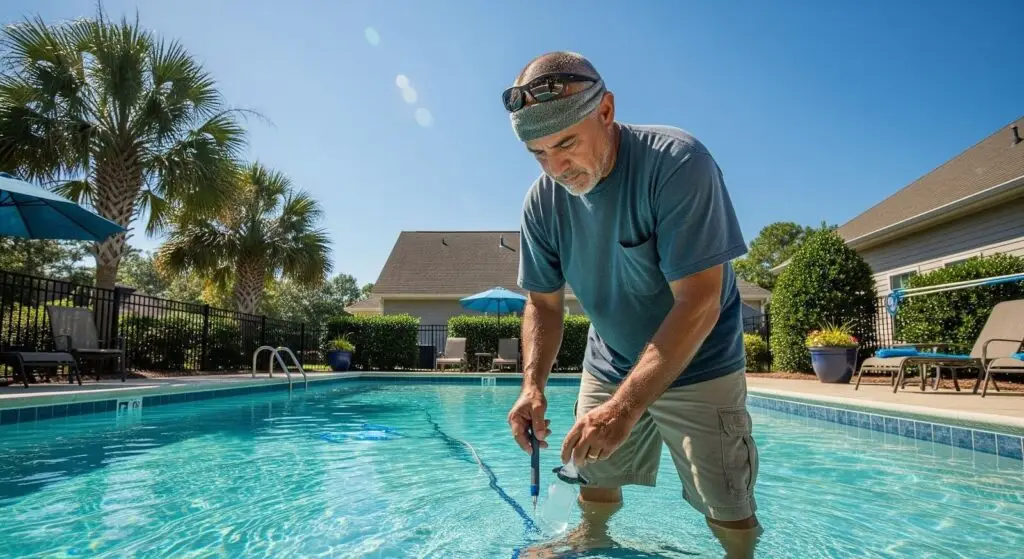
Weekly water testing forms the foundation of pool maintenance, though frequency may increase during challenging periods. pH, chlorine levels, alkalinity, and calcium hardness all require regular monitoring and adjustment.
Test kit accuracy becomes critical for reliable results. I recommend professional test kit calibration annually and replacement of liquid reagents that may degrade in South Carolina’s heat and humidity.
Chemical adjustment timing matters significantly. Adding chemicals during cooler evening hours improves effectiveness and reduces chemical waste due to UV degradation.
Weekly skimming and basket cleaning prevent debris accumulation that can overwhelm filtration systems. During peak debris seasons, this may require daily attention.
Brushing pool surfaces weekly prevents algae attachment and removes biofilm that can harbor bacteria. Pay special attention to areas with reduced circulation, like steps, corners, and behind ladders.
Automatic cleaner maintenance ensures optimal performance. Clean debris bags, check hoses for leaks, and verify proper operation patterns to maximize cleaning effectiveness.
Weekly equipment inspection identifies developing problems before they become expensive failures. Check pump baskets, inspect fittings for leaks, and verify proper equipment operation.
Filter inspection and cleaning frequency depend on conditions, but should be checked weekly during peak season. Dirty filters reduce circulation and strain pump motors.
Chemical feeder inspection ensures proper operation and prevents equipment damage from chemical exposure. Clean feed tubes, check solution levels, and verify calibration settings.
Monthly maintenance tasks address issues that develop over longer periods and require more intensive attention than weekly routines.
Monthly filter deep cleaning maintains optimal filtration performance. Sand filters benefit from backwashing and media stirring, while cartridge filters require thorough cleaning or replacement.
Filter media replacement schedules depend on usage and conditions but should be planned and budgeted. Sand typically lasts 3-5 years, while cartridge filters may need replacement every 2-4 months during peak season.
Monthly professional water analysis identifies trends and problems that basic test kits miss. Phosphate levels, metal content, and total dissolved solids all affect pool performance but require specialized testing.
Monthly equipment maintenance includes motor lubrication, o-ring inspection, and performance verification. These preventive measures extend equipment life and prevent costly failures.
Deciding which maintenance tasks to handle yourself versus hiring professionals depends on your comfort level, available time, and the complexity of required procedures.
Basic water testing, skimming, and routine cleaning are well-suited for homeowner maintenance. These tasks require minimal equipment and provide good learning opportunities for understanding your pool’s needs.
Chemical addition and adjustment can be handled by homeowners who invest time in understanding water chemistry principles. However, major chemical corrections often benefit from professional expertise.
Equipment repairs, major water chemistry problems, and seasonal opening/closing typically require professional expertise. The cost of mistakes often exceeds professional service costs.
Complex water chemistry issues like persistent algae blooms, metal staining, or scale formation require professional diagnosis and treatment. DIY attempts often make these problems worse and more expensive to correct.
Successful pool maintenance in South Carolina requires planning, supply needs, and budgeting for seasonal variations in chemical and maintenance costs.
Summer chemical consumption typically triples compared to winter usage. Chlorine, algaecide, and pH adjusters all see peak demand during hot weather and heavy use periods.
Bulk chemical purchasing during the off-season can provide significant savings. However, proper storage becomes critical in South Carolina’s heat and humidity to prevent chemical degradation.
Pool equipment has predictable lifespans that allow for replacement planning. Pumps typically last 8-12 years, heaters 5-10 years, and automation systems 7-15 years, depending on usage and maintenance.
Seasonal equipment stress in South Carolina often accelerates wear compared to milder climates. Planning replacements before failures prevents emergency repairs during peak season when costs and delays are highest.
While general guidelines provide structure, every pool requires customized maintenance based on specific conditions, usage patterns, and family preferences.
Pool size, equipment type, and bather load all influence maintenance requirements. Larger pools require more chemicals but may be more stable, while heavily used pools need more frequent attention regardless of size.
Environmental factors like tree coverage, prevailing winds, and neighborhood dust levels affect maintenance needs. Pools in heavily wooded areas require more frequent cleaning, while those in open areas may face different challenges.
Maintenance logs help identify patterns and optimize schedules based on actual results rather than generic recommendations. Track chemical usage, cleaning frequency, and equipment performance to develop customized approaches.
Seasonal adjustments should be gradual and based on observed conditions rather than calendar dates. South Carolina’s variable weather means flexibility often matters more than rigid scheduling.
Following a proper pool maintenance schedule, South Carolina pools thrive when we understand our unique climate challenges and adapt general principles to local conditions. Success comes from consistent attention to basics combined with flexibility to address seasonal variations and unexpected challenges.
The investment in proper maintenance pays dividends through extended equipment life, lower chemical costs, and most importantly, a pool that’s always ready for family enjoyment. Whether you handle maintenance yourself or work with professionals, understanding these principles helps ensure your pool remains a source of pleasure rather than problems throughout the year.