

Choosing the right pool type for your South Carolina home isn’t just about aesthetics or budget it’s about understanding how different construction methods perform in our unique upstate climate. After building pools throughout Spartanburg and Greenville for years, we’ve seen how each pool type handles our humid summers, occasional winter freezes, and clay-heavy soils that define our region.
Whether you’re dreaming of weekend pool parties or quiet evening swims, the pool type you choose will impact your family’s enjoyment and your long-term investment. Let’s break down the real-world differences between gunite, fiberglass, and vinyl pools, focusing on what matters most to South Carolina homeowners.
Before diving into comparisons, it’s helpful to understand what we’re comparing. Gunite pools use a steel rebar framework sprayed with concrete, creating a fully customized structure. Fiberglass pools arrive as pre-manufactured shells that get lowered into excavated holes. Vinyl pools use steel or polymer walls with flexible liner systems.
Each approach has evolved to serve different priorities: customization, speed of installation, upfront cost, or long-term durability. The key is matching these strengths to your specific situation and South Carolina’s environmental challenges.
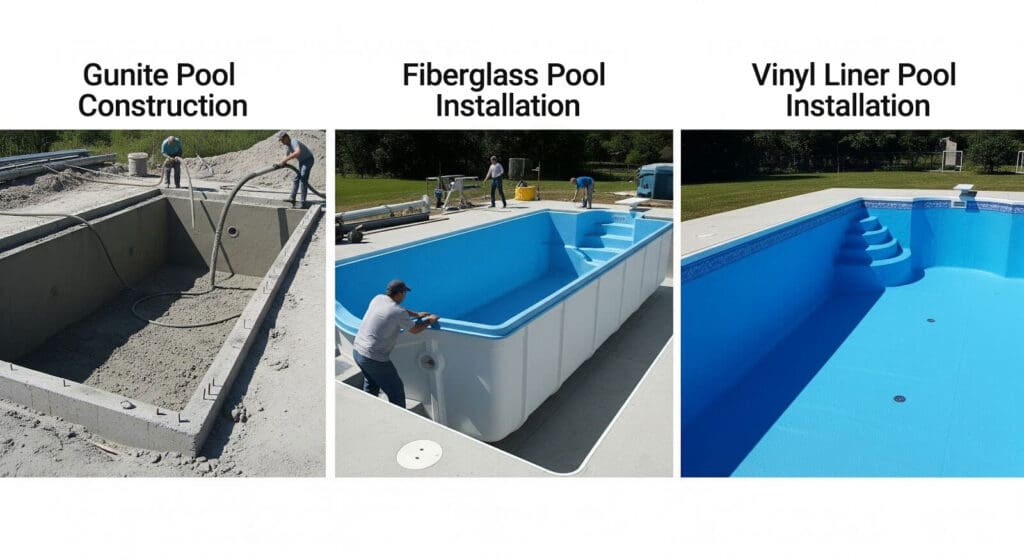
In our upstate climate, gunite pools excel because they’re built to last decades. The concrete shell can handle ground movement from our clay soils better than other options, and there’s no liner to worry about during those unexpected late-season freezes. We’ve serviced gunite pools in Spartanburg that were built in the 1980s and are still going strong with proper maintenance.
The thermal mass of concrete also works in your favor during our hot summers. Gunite pools naturally moderate temperature swings, staying cooler during those 95-degree August afternoons while retaining heat better during cooler spring and fall evenings when you want to extend your swimming season.
Where gunite shines is customization. Every gunite pool is built from scratch, meaning you can create exactly the shape, depth, and features your family wants. Whether that’s accommodating a sloped backyard in Greenville’s hillside neighborhoods or designing around mature trees you wish to preserve, gunite adapts to your specific lot conditions.
Features like beach entries, swim-up bars, integrated spas, and custom lighting can all be incorporated seamlessly during construction. This flexibility becomes especially valuable in established neighborhoods where lot sizes and shapes vary significantly.
Gunite pools typically require the highest upfront investment, with costs ranging from $80,000 to $200,000+, depending on size and features. However, when you factor in their 50+ year lifespan and the ability to update finishes and equipment over time, the cost per year of enjoyment often makes them the most economical choice long-term.
The construction process takes 8-12 weeks in most cases, longer than other options, but resulting in a truly permanent addition to your property.
Fiberglass performs reasonably well in our climate, though there are some considerations specific to upstate conditions. The shells are designed to flex slightly, which helps them handle minor ground movement. However, our clay soils can create uneven settling patterns that may stress fiberglass shells over time.
Temperature extremes can also affect fiberglass differently from concrete. The thinner shell walls mean faster heating and cooling, which can be advantageous for energy efficiency but may create more dramatic temperature swings during transitional seasons.
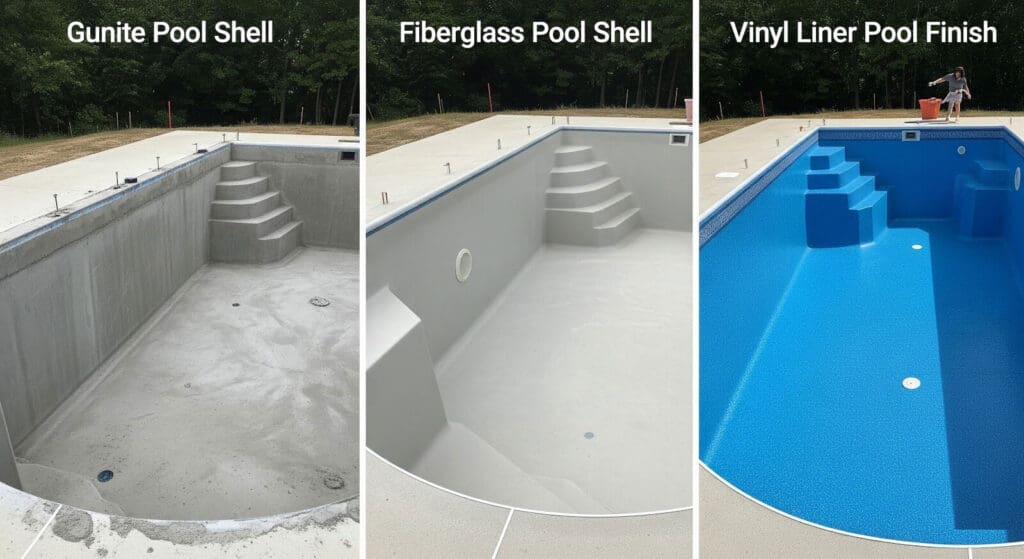
The biggest constraint with fiberglass pools is that you’re limited to pre-manufactured shapes and sizes. While manufacturers offer dozens of designs, you can’t modify dimensions or create custom features during manufacturing. This works well for homeowners who find a shell design they love, but it can be frustrating if your vision doesn’t match available options.
Most fiberglass pools max out around 16 feet wide due to transportation requirements, which can limit design possibilities for larger backyards. Custom features like integrated spas, beach entries, or unique depth configurations aren’t possible with standard fiberglass shells.
Fiberglass pools typically cost $60,000-$120,000 installed, positioning them between vinyl and gunite options. The smooth surface requires less brushing and chemical balancing than textured surfaces, potentially saving on long-term maintenance costs.
However, if damage does occur to the gel coat surface, repairs can be complex and expensive, often requiring specialized technicians and color-matching challenges.
Vinyl liner pools offer the lowest upfront cost, making pool ownership accessible to more families. The installation process is relatively quick, and modern vinyl patterns can create attractive appearances that rival other pool types.
Our upstate climate presents several challenges for vinyl pools. UV exposure from intense summer sun breaks down vinyl materials over time, typically requiring liner replacement every 7-10 years. The cost of replacement ($4,000-$8,000) should be factored into long-term ownership costs.
Temperature fluctuations can also cause vinyl to expand and contract, potentially creating wrinkling or pulling away from the coping. Sharp temperature drops during the winter months can make liners brittle and more susceptible to damage.
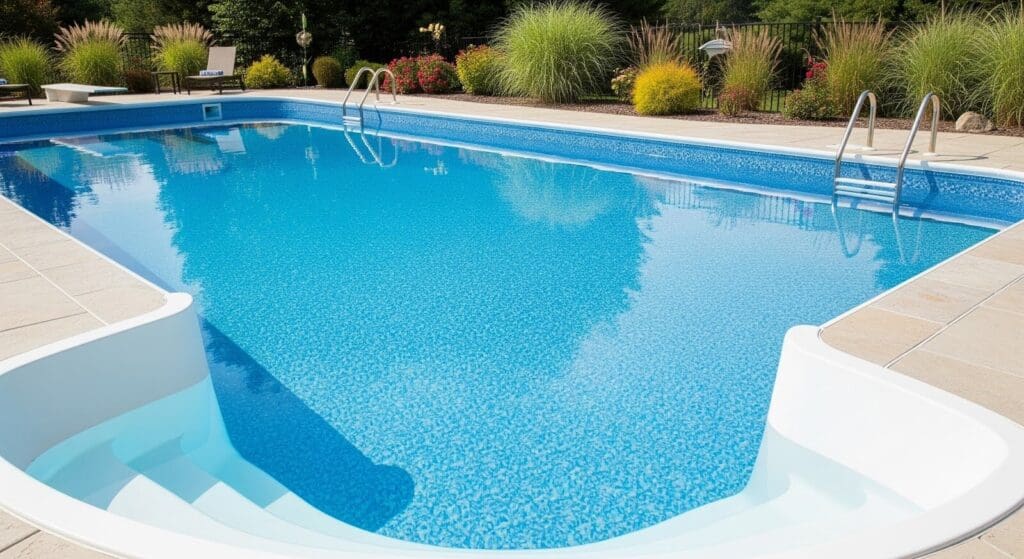
Vinyl pools require careful maintenance to prevent punctures and tears. Pool toys, pets, and normal use can damage liners, and repairs often leave visible patches. The seam areas where liner sections join are particularly vulnerable to failure over time.
Chemical balance becomes more critical with vinyl because improper pH or chlorine levels can damage or discolor the liner material. This means more attention to water chemistry and potentially higher chemical costs.
While vinyl pools start at $40,000-$80,000, the total cost of ownership over 20 years often approaches other pool types when you factor in liner replacements, increased maintenance, and potential structural repairs to the supporting walls.
Our upstate region presents unique challenges that should influence your pool type decision. The red clay soils common throughout Spartanburg and Greenville can create significant ground movement during wet and dry cycles. This movement affects different pool types differently.
Gunite pools, being monolithic concrete structures, handle soil movement best. The concrete becomes stronger over time and can accommodate minor settling without structural issues. Fiberglass pools rely on proper backfill and drainage to prevent problems, while vinyl pools may show liner stress if the supporting structure shifts.
South Carolina’s weather patterns, from summer thunderstorms to winter ice events, also play a role in pool longevity. Our humid summers promote algae growth in all pool types, but smooth fiberglass surfaces resist it better than textured concrete. However, concrete pools can be acid-washed or resurfaced if algae staining becomes severe, while fiberglass gel coat damage is permanent.
Winter freeze events, while rare, can damage any pool type if not properly winterized. However, concrete pools are most resilient to freeze damage, while vinyl liners can crack if ice formation occurs.
The best pool type for your South Carolina home depends on balancing your priorities: budget, timeline, customization needs, and long-term plans. Here’s how to think through the decision:
Working with experienced local contractors matters regardless of pool type. South Carolina’s building codes, soil conditions, and climate patterns require specific expertise that out-of-state contractors may lack. Look for builders who understand proper drainage for our clay soils, appropriate freeze protection methods, and local permit requirements.
The best pool builders in Spartanburg and Greenville will help you understand how each pool type performs in your specific lot conditions and match recommendations to your family’s lifestyle and budget.
This long-term view often reveals that higher-quality construction provides better value over time, especially for families planning to enjoy their pools for decades.
Your pool investment should enhance your family’s lifestyle and your property’s value for years to come. By understanding how different pool types perform in South Carolina’s unique environment, you can make an informed decision that you’ll be happy with long after the construction dust settles.
Whether you choose gunite, fiberglass, or vinyl, the most important factor is working with experienced local professionals who understand our climate and can guide you through the decision-making process. The right pool type, properly installed and maintained, will provide countless hours of family enjoyment and memories that last a lifetime.